
Check back regularly for Columbia’s latest AI research, thought leadership, and real-world use cases from our schools, centers, and institutes.
For deeper perspectives in your inbox, subscribe to Columbia AI Insights—a new publication that brings experts from across domains and disciplines to go beyond the headlines and enrich the public conversations around AI.

A Columbia Business School study by Professor Eric Johnson found that Americans frequently misidentify the most effective ways to reduce carbon emissions, suggesting that clear, nutrition-label-style information from companies could guide consumers toward more sustainable choices.

A study indicated that the COVID-19 pandemic doubled maternal deaths in the U.S. across all racial and ethnic groups in 2021, although changes in reporting complicated comparisons with pre-pandemic data.

Nobel laureate Joseph Stiglitz discusses the evolving meaning of freedom in the age of AI and the necessary adaptations of government, capitalism, and technology to safeguard democracy, while sharing his perspectives on economics, policy, and a more equitable future.

Leveraging advanced technologies, the field of exposomics aims to unlock biological archives to improve disease prevention and personalized medicine, necessitating collaboration and standardization for healthier lives.

Statistical bias in marketplace testing can lead companies to incorrect conclusions about product success, while users' strategic interactions can further skew recommendations.

Professor Laura Doval introduces a novel framework that enhances conventional economic models by enabling institutions to adapt strategies with new information, thereby tackling the "limited commitment" problem and fostering more adaptable, realistic, and impactful economic guidance for policy and markets.
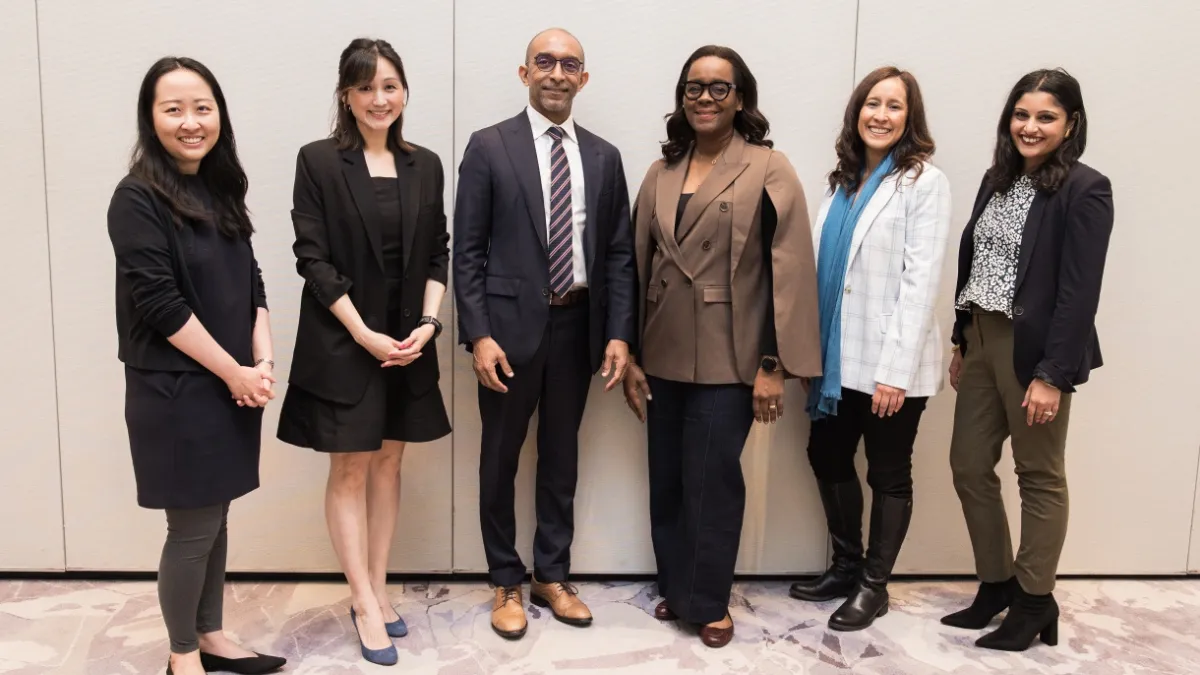
In March 2025, a San Francisco event hosted by the Women of Columbia Law initiative convened alumnae and students to discuss the legal ramifications of generative AI, highlighting the significance of intergenerational networking in tackling evolving legal challenges.
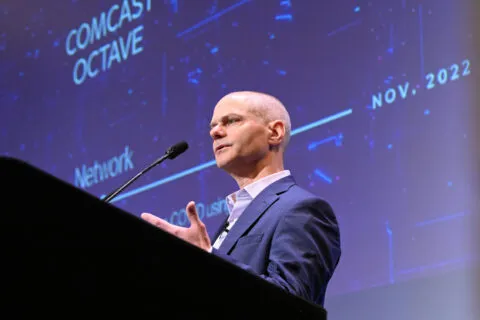
In his keynote at Data Science Day 2025, Rick Rioboli focused on what makes AI work at scale: trust, fit, and infrastructure. Real progress comes when systems integrate seamlessly into daily operations.
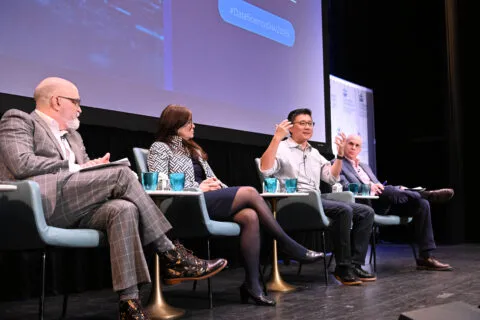
Trust isn’t a feature—it’s the framework. At Data Science Day 2025, panelists unpacked what it takes to build AI systems that detect threats, explain themselves, and stand up to real-world pressure.
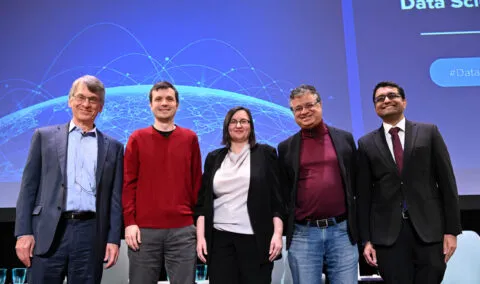
At Data Science Day’s opening panel, speakers tackled a core question: What are we really building with AI? From language models to climate tools, the focus was on purpose, power, and human responsibility.
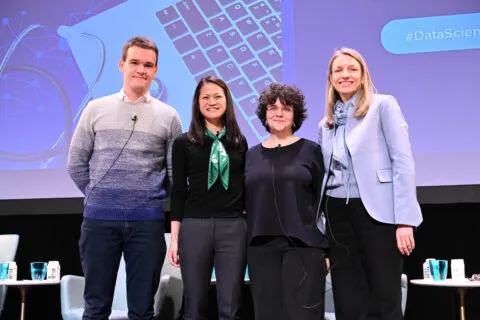
At Data Science Day 2025, experts explored how AI in health care must reckon with more than data—it must navigate equity, history, and lived experience. The panel was cntered on care, not just code.