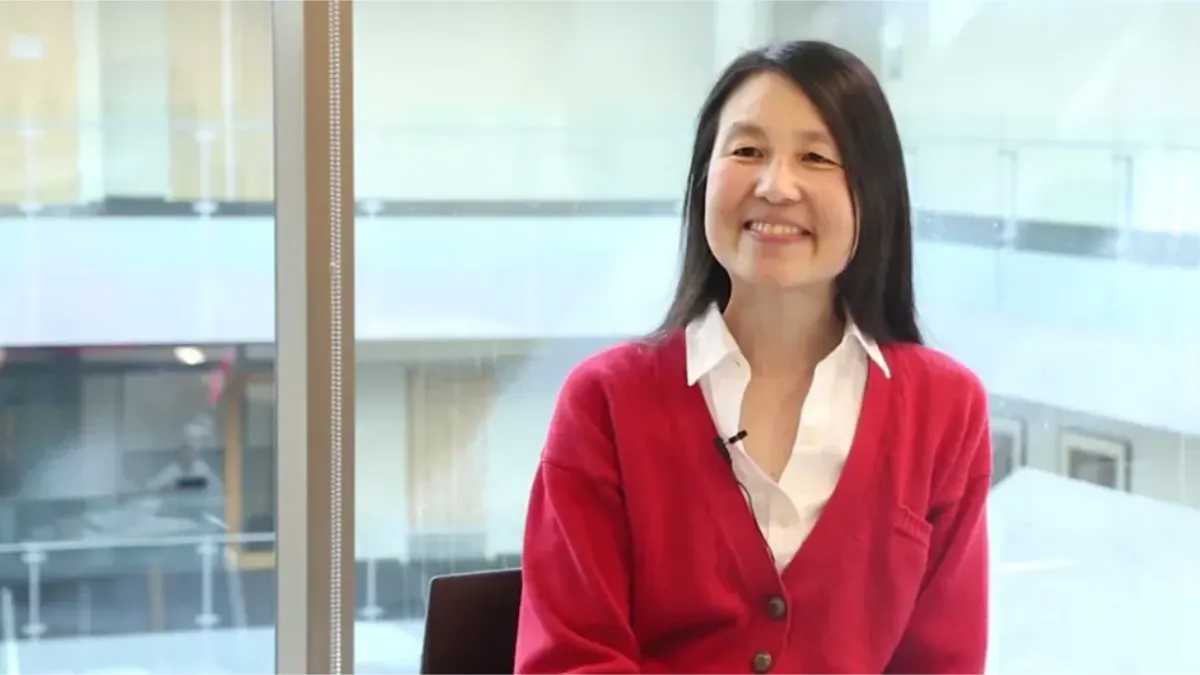
Columbia’s Jeannette Wing to Co-Lead New York’s AI Safety Research Center
More than 80 researchers across the state will devise scientific techniques and tools with the goal of making AI systems more trustworthy.
AI @ CLS will support AI integration, fueled by a partnership with law firm Paul, Weiss, Rifkind, Wharton & Garrison.
Explores how AI-driven misinformation can erode public trust and discourage political participation, particularly among Gen Z, and highlights the need for transparency, digital literacy, and responsible AI use.
How journalists writing about AI can avoid hyping the supposed humanity of machines.
With advancements in AI, China has found new ways to use the technology, including managing pig farms. This development allows for the country to rely less on foreign imports of agricultural products, affecting the worldwide economy.
A new study by Columbia researchers could pave the way for noninvasive brain-computer interfaces that allow patients with hidden consciousness to communicate with family members and physicians. The study shows that unresponsive ICU patients with brain injuries—when connected to a noninvasive brain-computer interface designed by Columbia researchers—were able to control the frequency of a beeping tone with their minds.
Examines how Chile’s push to become an AI hub is straining already scarce water resources, raising concerns about prioritizing foreign tech investments over communities’ access to essential drinking water.
A Columbia team has trained AI to approximate in three seconds a Greenland ice-sheet simulation that normally takes a week to run, allowing scientists to test far more scenarios to better understand how quickly the ice will melt and how much it could raise sea levels along the world’s coastlines.
The Tow Center’s updated AI deals tracker reveals a complex landscape with striking geographic inequities.
Columbia’s LEAP center brought together researchers and industry leaders to explore how agentic AI can accelerate climate research, improve forecasting, and support climate adaptation while raising questions about trust, verification, and human expertise.
Carts filled with more indulgent products can increase consumer guilt and make shoppers more likely to walk away without buying, according to new research from Columbia Business School.
The midterms pushed data centers center stage, as media, activists, and politicians questioned AI’s ever-expanding infrastructure.
Student Leadership and Ethics Board member Abby Tse ’27 reflects on Professor Adina Sterling’s Equity by Design course.
Columbia has treated 500 patients using AI-powered adaptive radiation therapy, which personalizes cancer treatment to target tumors while minimizing exposure to healthy tissue.
Columbia Business School professor Omar Besbes weighs in on the rise of AI shopping agents and why traditional retailers still have the upper hand.
More than 80 researchers across the state will devise scientific techniques and tools with the goal of making AI systems more trustworthy.