What Does It Mean to Be Creative in the Age of AI?
Image Carousel with 2 slides
A carousel is a rotating set of images. Use the previous and next buttons to change the displayed slide
-
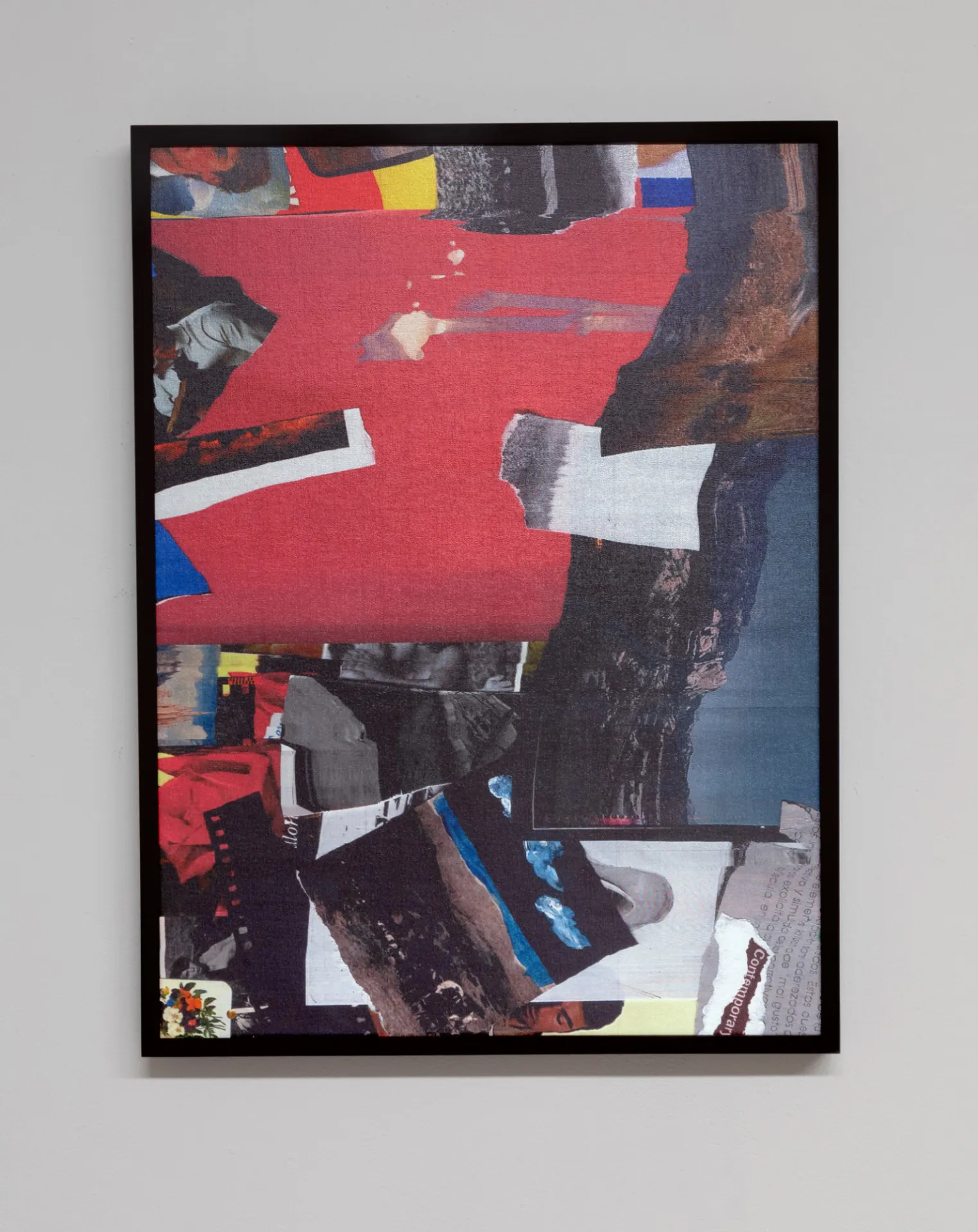
Slide 1: These images were created by combining still photos with with AI-generated imagery of the same object, then stitching them into collages that blur the line between machine- and human-made. Image by Akira Kawahata. Provided courtesy of the artist.
-
Slide 2: These images were created by combining still photos with with AI-generated imagery of the same object, then stitching them into collages that blur the line between machine- and human-made. Image by Akira Kawahata. Provided courtesy of the artist.


If AI can generate an image, a design, or a novel in seconds, what’s the role of the human creator?
That question is reshaping careers and forcing a reckoning across industries, from advertising to journalism. Even as some artists and media companies sue AI firms for copyright infringement, many more are adopting the tools in their work.
For some creators, the stakes can feel existential. A July 2025 Brookings study found that freelancers in fields more exposed to generative AI — such as graphic design — had already begun to see fewer contracts and lower earnings after the launch of tools like ChatGPT and DALL·E. It’s one sign of how quickly AI is reshaping creative work.
Against this backdrop, Columbia faculty and students are probing the evolving relationship between humans and machines — exploring what counts as art, design, and innovation, and what it means to create in the age of AI.
AI’s Limits, and the Human Edge
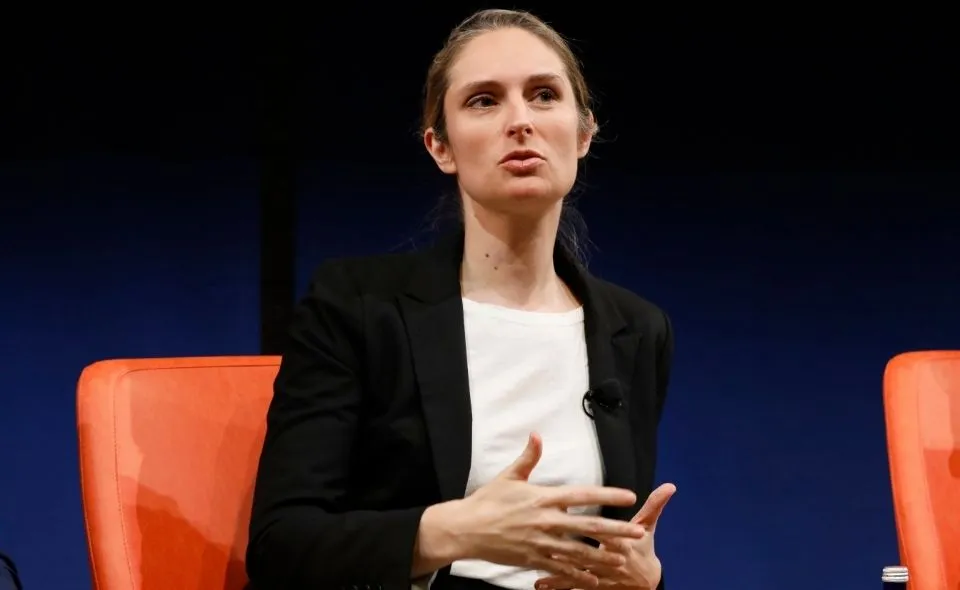
“Generative AI needs people,” said Lydia Chilton, Associate Professor of Computer Science at Columbia Engineering, speaking at the AI Actioning Summit.
Her research on human-AI collaboration explores how people can harness these tools for design, innovation, and problem-solving — but only by bringing human judgment to the process.
Working from a design thinking framework, Chilton describes innovation as a cycle of “flare” (divergent thinking) and “focus” (convergent thinking). AI, she notes, excels at the flare: producing ideas rapidly and at scale. Humans bring the focus — the ability to analyze, evaluate, and make meaning.
Generative AI is, by its very nature, “reductive and fundamentally unoriginal,” Chilton said. And crucially, it lacks cognition: it cannot evaluate truth, accuracy, or how its output will be perceived, offering only “the most average and most common prediction.”
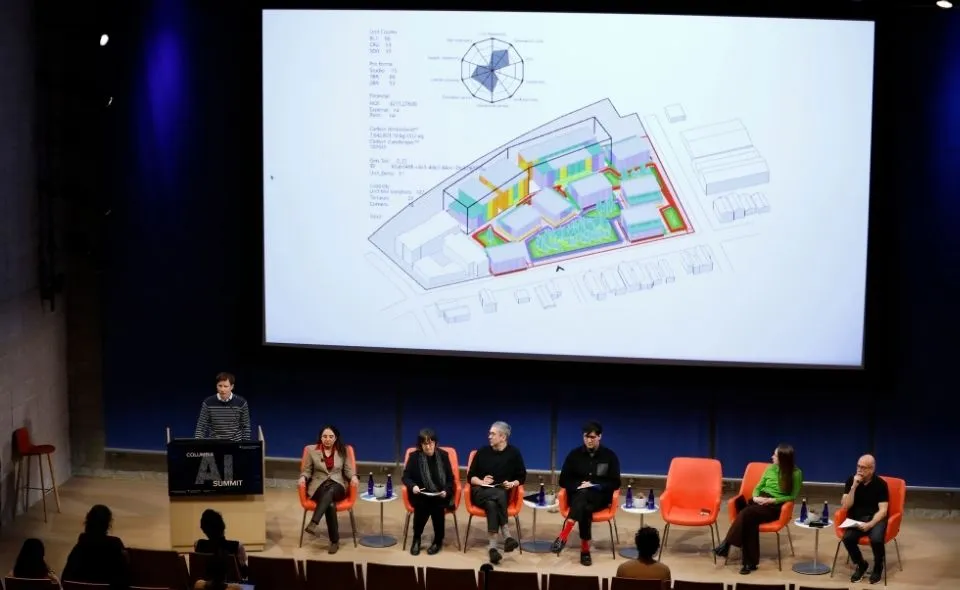
David Benjamin, an Associate Professor of Architecture and Founding Principal of the design and research practice, The Living, sees this dynamic in practice. In a talk at the Columbia AI Summit, he described how he and his team use generative design to expand creative possibilities for projects ranging from lightweight airplane partitions to factory layouts that balance financial, operational, environmental, and social goals.
AI helps generate a wide range of options, he says, “but the final design requires human stakeholders to exercise judgment and make collaborative decisions.“
Context, Critique, and Consequences
When teaching these new tools for practice, Laura Kurgan, Professor of Architecture, Planning and Preservation, and Director of the MS in Computational Design Practices program, situates generative AI in a longer history of design technologies, each one bringing tradeoffs.
For example, when computer-aided design (CAD) was initially released, Kurgan says many architecture faculty resisted teaching it in foundational courses. Even though drawing with computers enabled students— especially those who start the program without prior training—a new facility and ease in drawing, these faculty wanted students to learn to draw by hand. But the resistance has passed, and twenty years later, CAD is embedded in the first-year architecture curriculum at the Graduate School of Architecture, Planning and Preservation. But while the new tool makes drawing and visualizing easier, students don’t learn the same sense of scale that hand-drawing or the size of a piece of paper demands.
While AI technology may similarly accelerate design, it has its own drawbacks. For Kurgan, these come from the fact that these tools are built and trained by the data that is input into the model, and that training shapes the representations they output. She said: "There are so many hidden layers in AI models." and she therefore instructs her students to “know why you’re using a certain tool, and know how the parameters and affordances of that tool will affect your design output.”
Naeem Mohaiemen, Associate Professor of Visual Arts, Concentration Head of Photography, and Director of Undergraduate Studies at the School of Arts, also focuses on contextualizing AI tools. For him, it is within broader historical and societal shifts, working to counteract what he sees as “hyper-speed market narratives that are more interested in short term disruption (‘move fast, break things’), than long term human flourishing.”
In Machine Visions, a course and lecture series he launched to explore AI alongside students, he positions generative AI within the context of earlier writings about technology: art in the age of mechanical reproduction (Walter Benjamin), cyborg imaginaries (Philip K. Dick), and sentient decision-making (Arthur C. Clark). To both develop a critique while exploring the positive aspects of the technology, he included content that addresses the role of human labor, copyright law, government oversight, regulation, and the ethics of AI, including perspectives from practicing artists, as well as members of industry.
One case he highlights is Adobe’s Content Authenticity Initiative (CAI), a cross-industry effort to increase transparency and track the provenance of digital media. While such tools allow artists to embed attribution and usage information directly into their work, Mohaiemen cautions that it shifts responsibility for protecting creative outputs from industry to individuals.
AI as Material, Not Maker
While Mohaiemen said the tech industry has yet to offer satisfactory solutions to the challenges the tools pose around copyright, “practicing artists and students are more healthily skeptical– as well as inventively curious.” His students treat AI as a tool, but not to create finished products—instead they approached AI outputs as material to work with, and many produced uniquely personal works.
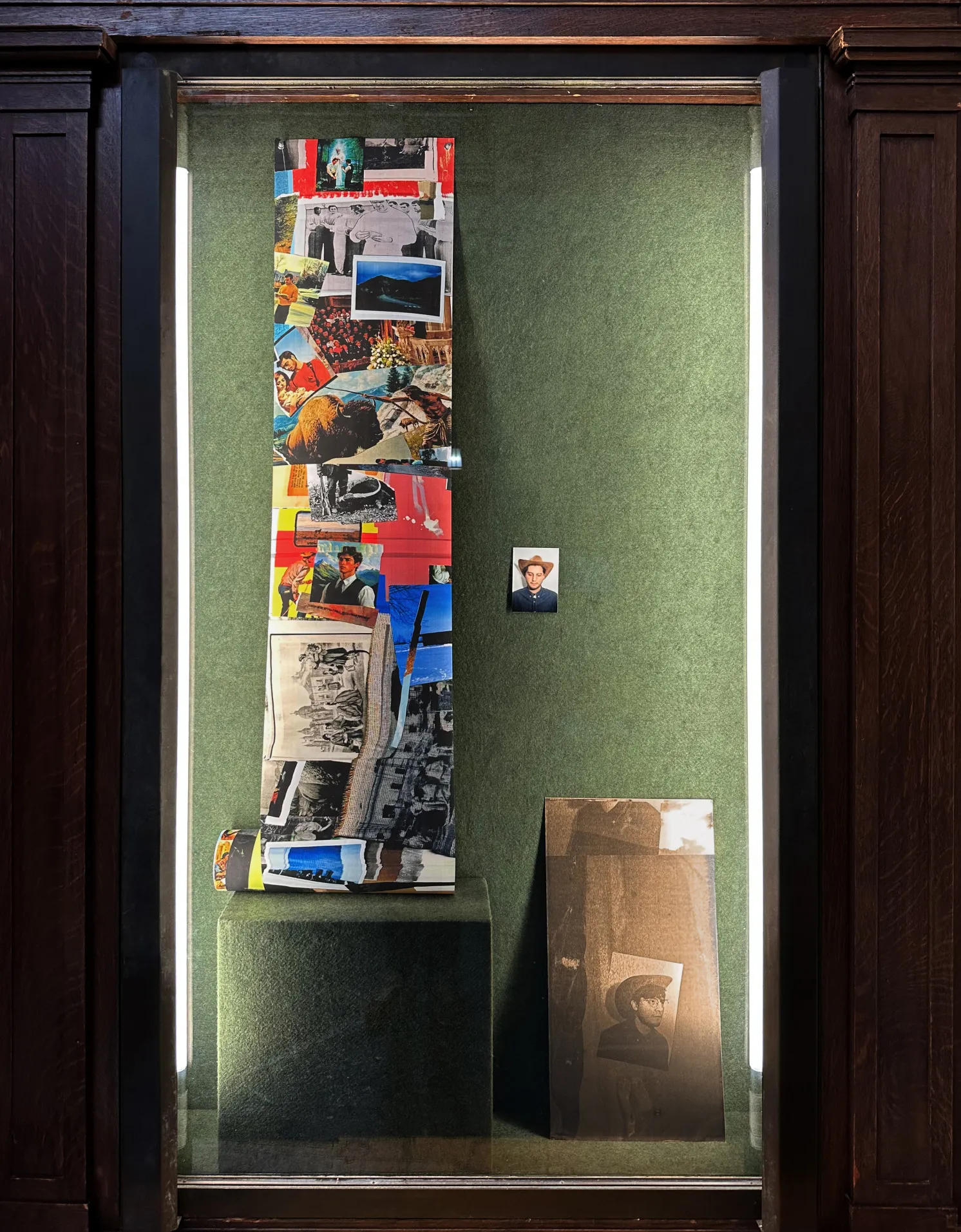
Student artist Francisco Javier Ramirez, for example, used generative AI to create a collage of real and fictional archival images, contrasting AI-generated clichés with the authentic visual reality of his Mexican Mormon migrant family. “AI has these capabilities of allowing us to create a different sort of family and queer archive,” he observed.
AKIRA KAWAHATA, whose photography is highly detailed, used AI as a point of departure. Seeking “the balance between concept and beauty in art,” he combined his own still life photographs of botanical specimens with AI-generated imagery of the same object, stitching them into collages that blur the line between machine- and human-made. “AI reminds artists to take a step back and rethink what photography really means today,” he said.
Both projects show students redirecting AI outputs toward personal meaning, keeping human judgment and perspective central.
Image Carousel with 4 slides
A carousel is a rotating set of images. Use the previous and next buttons to change the displayed slide
-
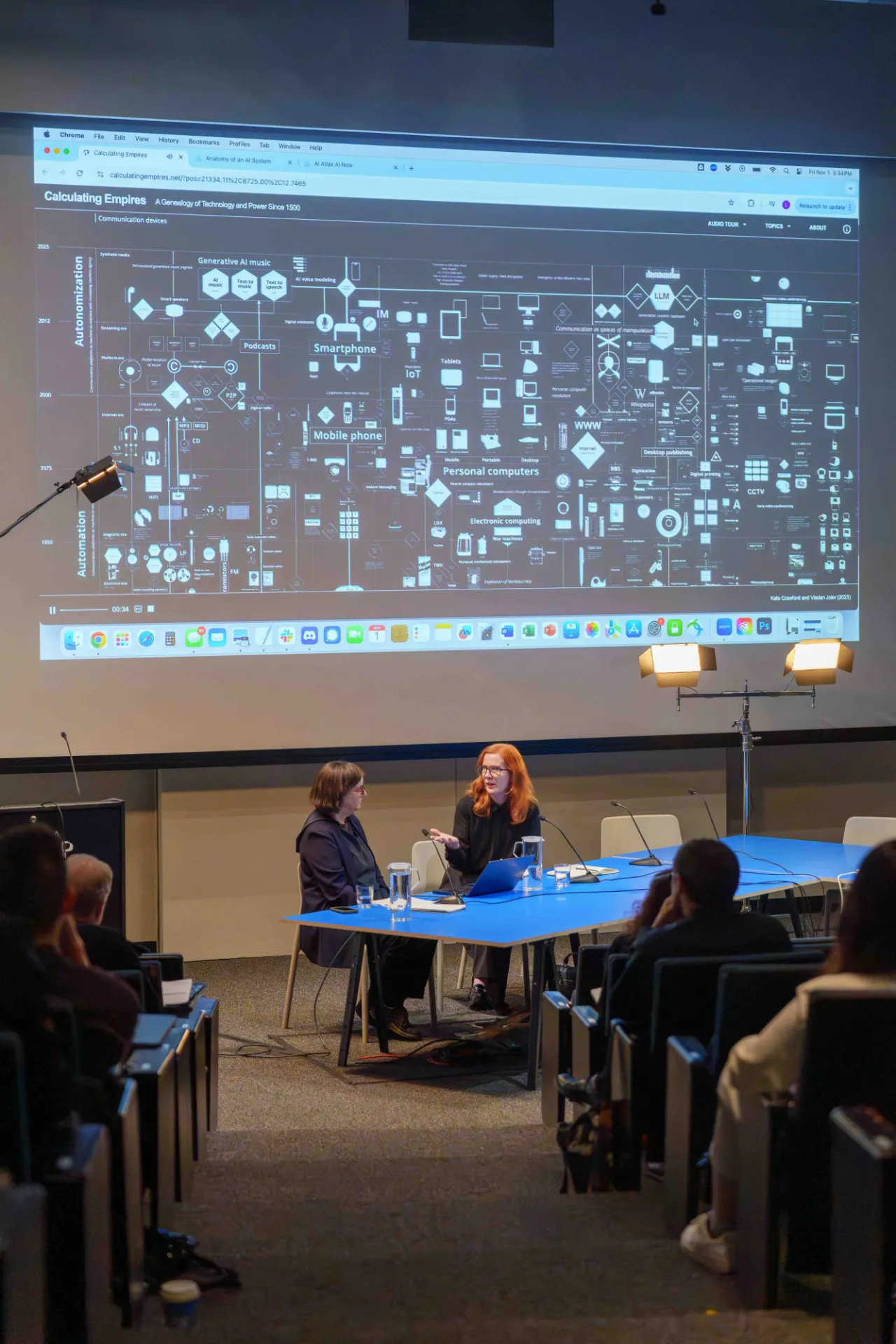
Slide 1: Laura Kurgan (left) interviews Kate Crawford (right) at the AI Actioning Summit
-
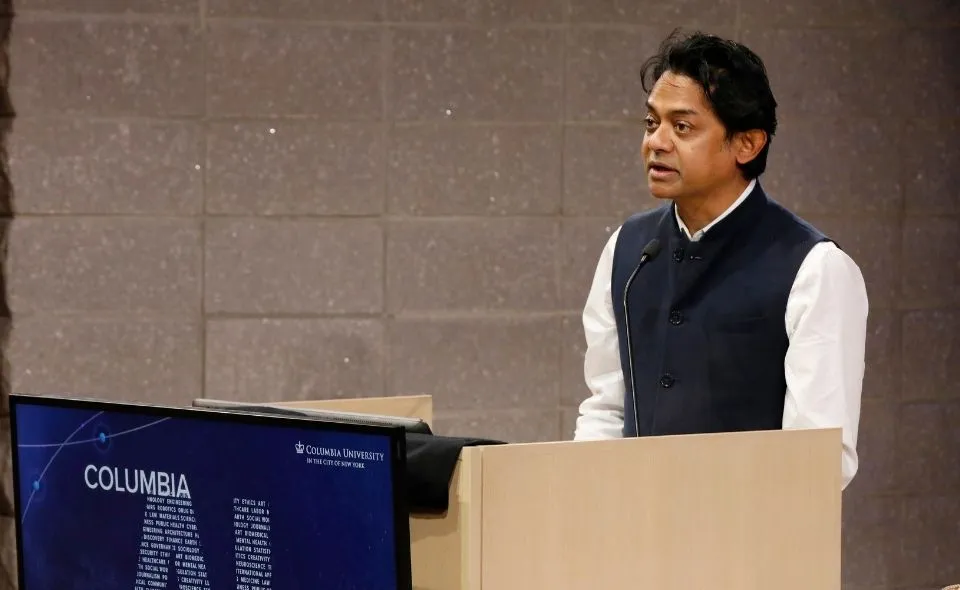
Slide 2: Naeem Mohaiemen, Associate Professor of Visual Arts, introduces a panel discussion on AI and creativity at the Columbia AI Summit. Photo by Michael DeVito.
-
Slide 3: "Generative AI needs people," says Lydia Chilton. Chilton is pictured at the Columbia AI Summit on March 4, 2025.
-
Slide 4: David Benjamin, an Associate Professor of Architecture, uses AI to generate design options “but the final design requires human stakeholders to exercise judgment and make collaborative decisions,“ he says during remarks at the Columbia AI Summit on March 4, 2025. Photo by Michael DeVito.
Informed and Inspired
Design, Kurgan argues, is inherently forward-looking. While AI tools may streamline routine tasks, they cannot replicate the human aspects of art-making, which become more focused on choosing, contextualizing, and critiquing.
“You have to be aware of what is gained and what is lost,” said Kurgan. “You can't make a narrative without thinking about the social power structures behind each choice. That’s what I aspire to teach my students to become–informed, inspired, critical, intelligent users.”